|
|
|
|
 |
|
Jeremy Helmes
ODWS Director |
|
|
Dear friends and colleagues,
As you know, the word “Eucharist” means “thanksgiving”. Each time we gather to celebrate the Eucharist, we gather to give thanks. We come together to express our gratitude for all that God has given to us, especially the gift of his only-begotten Son, in whose name we gather, whose Word we proclaim, whose Body and Blood we share in Holy Communion, and whose witnesses we are to the world.
In this month of gratitude, let me thank YOU for your tireless ministry in the Lord’s vineyard, particularly in your liturgical and sacramental ministries. I am grateful for your constant attention to the Lord’s presence in our worship and sacramental ministry, and your leadership and service to the people of God.
In this issue of Praenotanda, you’ll find information about the new liturgical calendar, webinars on the new Liturgy of the Hours, other formation opportunities, and more!
As always, if there’s anything that Matthew, Gloria Ann, or I can do to assist you in your worship and sacramental ministries, please let us know.
“Let us give thanks to the Lord our God. It is right and just.” |
|
|
|
|
|
|
|
 |
|
Matthew J. Geerlings
Music Director |
|
|
With Advent almost upon us it’s time to take another look at the most often used (and perhaps overdone) hymn, O Come, O Come, Emmanuel, based on the O Antiphons.
These O Antiphons were developed early in the Church’s history. The writer Boethius, who died ca. 525, mentions them, and by the 8th century they were in use in Rome.
There are seven of these antiphons, springing from the Old Testament, and address Jesus by one of His Old Testament titles. They are prayers asking Our Lord to come to us. While not readily apparent to most, the monks who first began to chant these antiphons arranged them in a very specific way to convey a specific message:
Sapientia (Wisdom)
Adonai (Lord)
Radix (Root)
Clavis (Key)
Oriens (Dawn)
Rex (King)
Emmanuel (God-with-us)
The first letters of each of these names, working from the last to the first, spells the EROCRAS, or “ero cras” – meaning “I will be there tomorrow.” Hence, the nature of the O Antiphons chanted the 7 days before Christmas Eve. (This is also a good reason to perhaps save this hymn more for the end of Advent, rather than the beginning, during which the focus is more on the Second Coming than the Incarnation.)
From a performance aspect, it is always important to never let this venerable hymn drag. For an interesting rendition of this hymn, look for the setting by Andrew Carter. It is full of power and energy and brings us to our Lord’s nativity with awe and wonder.
Based on an article by Rev. James DeViese, Jr., JCL
Soli Deo Gloria |
|
|
|
|
|
Rite of Election 2027
Dates, times, and locations for the Rite of Election (and Calling of Candidates to Continuing Conversion) are published for Lent 2027. Notable as something different than past years, options are available on both the First and Second Sundays of Lent (Feb 14 AND 21). |
| LEARN MORE |
|
|
|
|
|
LIturgy of the Hours: Webinars and Books
As you know by now, the new translation of the Liturgy of the Hours is forthcoming over the next few years. You can learn more about the timetable and find publishers on the ODWS website.
The FDLC is offering free webinars on the theology and history of the Liturgy of the Hours, as well as on the new translation and its implementation. |
| SIGN UP |
|
|
|
|
|
Archdiocesan Choir
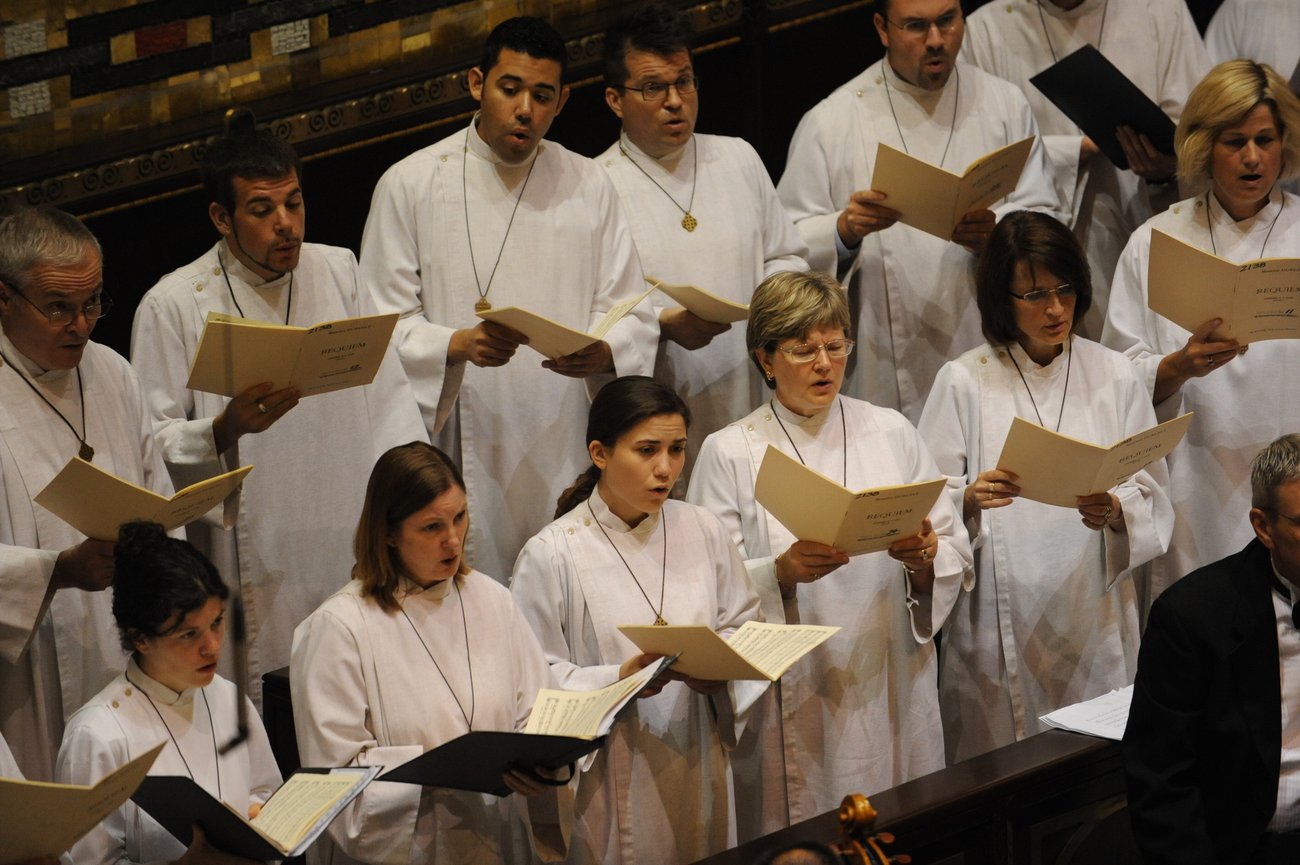
The Archdiocesan Choir serves the faithful of the Archdiocese of Cincinnati by leading them in sung prayer for our archdiocesan liturgies, inspiring beauty through sacred music, and lifting their voices in joyful praise to God with the patrimony of sacred music, both old and new, in service to His Church. The choir is open to all adult Catholics of the Archdiocese of Cincinnati who commit to the mission of our choir, meet the basic musicianship requirements, and are available for the schedule of rehearsals and liturgies. |
| LEARN MORE |
|
|
|
|
|
NPM becomes NACCM
The National Association of Pastoral Musicians (NPM) has changed its name to National Association of Catholic Church Musicians (NACCM). After 50 years, the name and logo have changed, but the mission remains the same. The new name better reflects Catholic identity and honors the association’s Catholic foundation, including their role as an auxiliary of the United States Conference of Catholic Bishops (USCCB). |
| LEARN MORE |
|
|
|
|
|
Liturgical Calendar
The 2027 liturgical calendar is now available on our website. |
| LEARN MORE |
|
|
|
|
|
Pueri Cantores Children's Choir Festival
Sat, March 13
Cathedral Basilica of the Assumption (Covington)
The festival brings together singers in grades 4–12 from parishes, schools, and homeschool communities for combined rehearsals, fellowship, and the inspiring experience of singing as one large choir during Mass.
Participation can also strengthen parish and school music programs. |
| LEARN MORE |
|
|
|
|
|
Bicentennial Hymn: Christ Our Light
Don’t forget that our bicentennial hymn, Christ Our Light, commissioned in 2021 and authored by Sr. Genevieve Glen, OSB, is a wonderful text for use during Christmastide and Winter Ordinary Time. It can be easily sung to many familiar 8 7 8 7 D hymn tunes that most congregations will know. A few settings and accompanying materials are available on the ODWS website. |
| RESOURCES |
|
|
|
|
 |
|
Q. Must an Advent wreath be placed in the sanctuary of the church? What about the creche/manger scene?
A. No. In fact, nothing should detract from the centrality of the altar in the sanctuary, even as regards seasonal décor. An Advent wreath or creche may be placed in the sanctuary, but it should not obscure the centrality of the altar. The U.S. bishops teach: “The altar should remain clear and free-standing, not walled in by massive floral displays or the Christmas crib, and pathways in the narthex, nave, and sanctuary should remain clear.” (Built of Living Stones 124). Consider the gathering space, foyer, side chapels, etc. for placement of seasonal devotional symbols rather than the sanctuary itself. |
|
|
EUCHARISTIC COMMUNION |
|
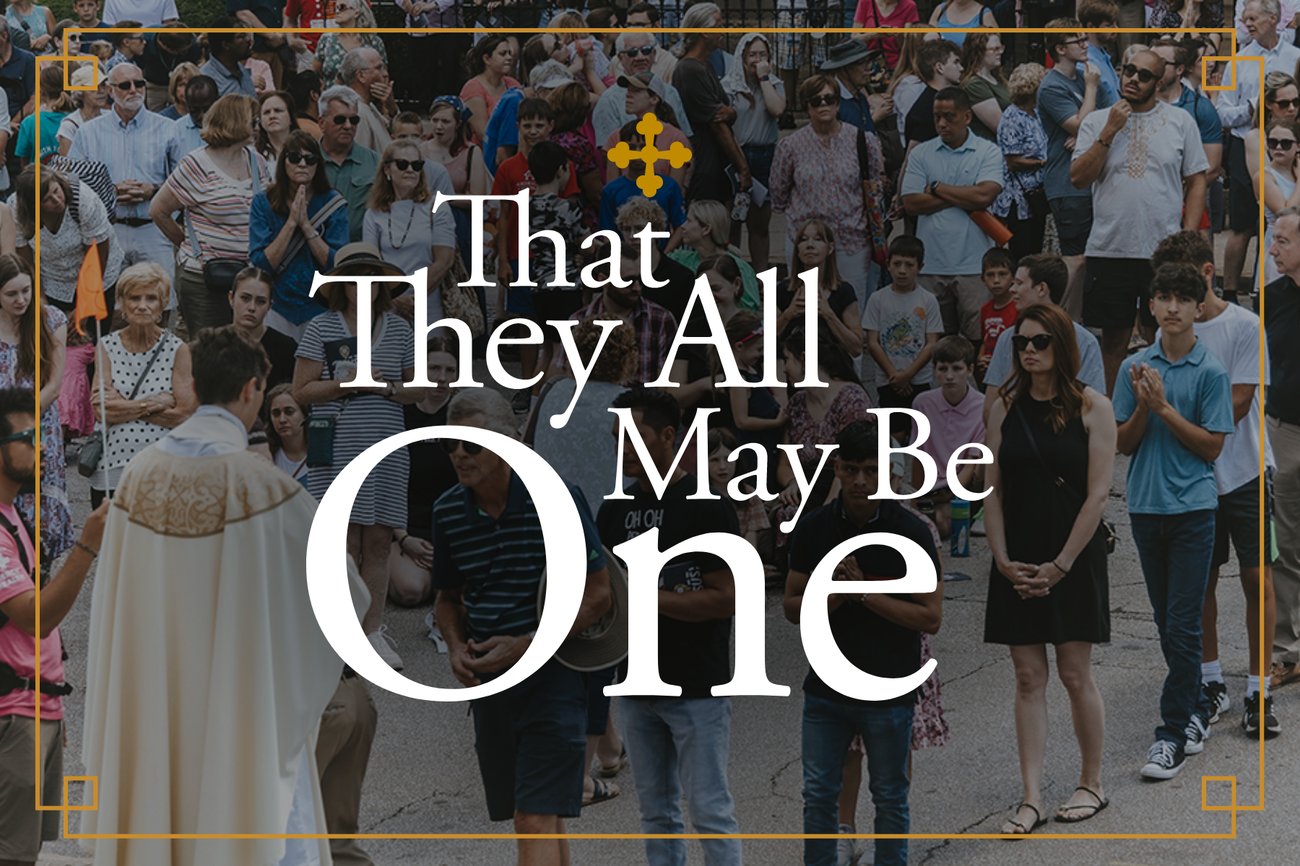
“'Communion' implies that we are brought together to do something in common, not just individuals gathered to do the same thing at the same time. In the midst of our modern world, Christians are continuously called to come together, to value community, to be one; the mystery of the Incarnation demands more than just virtual “presence” on a screen. Gathered at the altar, the Eucharistic celebration is the primary way the Church comes together so that she may be sent forth to manifest God’s love to the world." |
|
— ARCHBISHOP ROBERT G. CASEY
That They All May Be One, Sept 2026
|
|
READ MORE > |
|
|
|
|
|
|
 |
|
Choose the content that matters to you. |
| EXPLORE OUR NEWSLETTERS |
|
Pastoral Center | 100 East Eighth St | Cincinnati, Ohio 45202 | CatholicAOC.org |
|
|
|
|
|
|