|
|
|
|
 |
|
Jeremy Helmes
ODWS Director |
|
|
Dear friends and colleagues,
You may notice in this edition of Praenotanda a refreshed look, simpler and streamlined. We hope this makes it a bit more readable and useful for you.
As you know, the word “Eucharist” means “thanksgiving”. Each time we gather to celebrate the Eucharist, we gather to give thanks. We come together to express our gratitude for all that God has given to us, especially the gift of his only-begotten Son, in whose name we gather, whose Word we proclaim, whose Body and Blood we share in Holy Communion, and whose witnesses we are to the world.
In this month of gratitude, let me thank YOU for your tireless ministry in the Lord’s vineyard, particularly in your liturgical and sacramental ministries. I am grateful for your constant attention to the Lord’s presence in our worship and sacramental ministry, and your leadership and service to the people of God.
In this issue of Praenotanda, you’ll find information about the new liturgical calendar, new policy, and more!
As always, if there’s anything that Matthew, Gloria Ann, or I can do to assist you in your worship and sacramental ministries, please let us know.
“Let us give thanks to the Lord our God. It is right and just.” |
|
|
|
|
|
|
|
 |
|
Matthew J. Geerlings
Music Director |
|
|
In my travels around the country and in Europe I’ve spotted a growing trend of screens in churches. My first encounter was at Notre Dame Cathedral in Paris in 2003. I remember thinking, “Why on earth, in this most beautiful of churches, would they want to distract us with a screen?” I’ve seen screens utilized more and more, sometimes projecting readings and song lyrics (copyright issues?), announcements, and sometimes simply projecting the liturgical action taking place.
Here's what the U.S. bishops have to say:
“The current policy of the Committee on Divine Worship [of the United States Conference of Catholic Bishops] is that permission is not granted to project readings and liturgical texts on screens during the liturgy. The bishops have the perspective that since so many people spend much of their time looking at screens, the Sacred Liturgy ought to be a prayerful break from that experience. The bishops also believe that screens are a distraction from what is actually taking place in the liturgy.”
The phrase “…people spend much of their time looking at screens…” really hits home. Go to any restaurant or other public establishment and watch how many are looking at their phones. The human experience of communicating with who is around you is lost to our screens. The sacred liturgy should be a time when we communicate intimately with our Lord through prayer and praise, and through reception of his divine body and blood in the Eucharist.
Soli Deo Gloria
|
|
|
|
|
|
NEW: Archdiocesan Policy on Catholic High Schools and Initiation Ministry
Each year, as our Catholic High Schools take up the task of forming and evangelizing every student in their care, we have the happy problem of discerning how to minister to students who wish to become Catholic. Motivated by this and by the new National Statutes of the OCIA, the Center for the New Evangelization, in collaboration with the ODWS and the Catholic Schools Office, have developed the following policy which outlines what a partnership between the parish and the school might look like so that our schools can play an important role in the Christian initiation of our students while still ensuring that the parish is the primary context for this journey. |
| POLICY |
|
|
|
|
|
Liturgical Calendar 2026
The 2026 liturgical calendar for the dioceses of the United States of America is now available online. |
| CALENDAR |
|
|
|
|
|
Jubilee Year Masses
Pope Francis declared 2025 to be a Holy Year, a jubilee for the Church. The theme of the Jubilee Year 2025, “Pilgrims of Hope,” is uniquely captured in the prayers, readings, and options of the Mass for the Holy Year. Approved by the Holy See on May 13, 2024 in eight languages, the Mass for the Holy Year may continue to be used in the liturgy for the duration of the Jubilee, concluding on December 28, 2025. It contains three formularies, a set of Lectionary readings, five sets of tropes for the Penitential Act, and four sets of introductions, responses, and conclusions for the Universal Prayer (Prayer of the Faithful). |
| LEARN MORE |
|
|
|
|
 |
|
Q. When may incense be used at Mass? When should it be used?
A. The use of incense at Mass is “an expression of reverence and of prayer, as is signified by Sacred Scripture.” (GIRM 276) Its rising smoke is symbolic of our prayers “rising to God on high.” While incense may be used anytime, the General Instruction of the Roman Missal suggests it is most appropriate on Sundays and festive days. (GIRM 119) Some parishes use incense at Mass each Sunday (at least for one Mass); others reserve its use for only the most solemn of days (e.g. Holy Thursday, Easter Vigil, Christmas Mass at Midnight, etc.). Perhaps a middle ground is most appropriate: incense can add solemnity to the most important days of our liturgical calendar. Consider using incense on Epiphany, Ascension, Pentecost, or even other lesser solemnities that fall on Sundays such as Christ the King, Trinity, etc. Also, in light of parishioners with respiratory issues, consider using incense at Masses which fall later in the weekend schedule, reserving the anticipated and early Sunday morning Masses as “incense-free.”
|
|
|
AUTHENTIC WORSHIP |
|
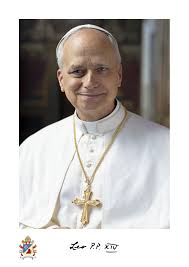
"Works of mercy are recommended as a sign of the authenticity of worship, which, while giving praise to God, has the task of opening us to the transformation that the Spirit can bring about in us, so that we may all become an image of Christ and his mercy towards the weakest. In this sense, our relationship with the Lord, expressed in worship, also aims to free us from the risk of living our relationships according to a logic of calculation and self-interest.” |
|
— DILEXI TE
Pope Leo XIV, 2025
|
|
READ MORE > |
|
|
|
|
|
|
 |
|
Choose the content that matters to you. |
| EXPLORE OUR NEWSLETTERS |
|
Pastoral Center | 100 East Eighth St | Cincinnati, Ohio 45202 | CatholicAOC.org |
|
|
|
|
|
|